Stargazing
A Night with the Universe
So why is stargazing here so good? Blame it on the trade winds, altitude, and the island’s strict light pollution laws. In other words, you won’t be squinting past neon billboards or airport glare. Instead, you get a pure dark canvas where the Milky Way looks like someone’s carelessly spilt a pot of glitter.
Where to go stargazing in Gran Canaria
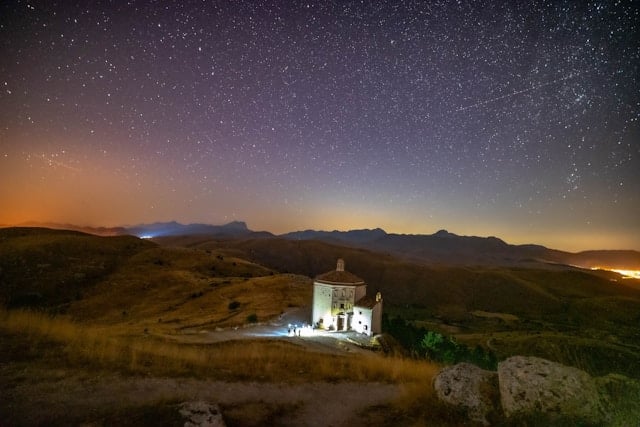
The best views are found away from the coast and deep into the island’s highlands. Roque Nublo, the giant rock sentinel at the island’s heart, is a prime spot. Hike up there by day and stay till dusk, and you’ll watch the sky transform from fiery sunset to a blanket of stars. Just remember a jumper, it gets nippy at altitude.
Another favourite is Pico de las Nieves, the island’s highest peak. At 1,949 metres, it’s practically nose-to-nose with the constellations. On a clear night you’ll see Orion’s belt shining like a trio of diamond buttons, and if you’re lucky, the Andromeda Galaxy hovering faintly beyond. Not bad for free entertainment.
Closer to civilisation, the protected Tamadaba Natural Park is a safe bet. The park is part of a UNESCO Biosphere Reserve, and the skies are so dark they’ll make your torch look like a lighthouse.
Stargazing tours in Gran Canaria
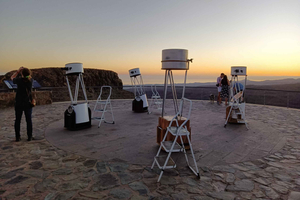
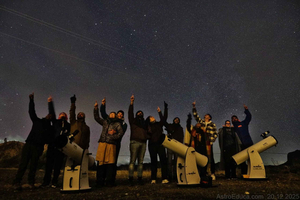
Of course, you don’t need to lug a telescope on the plane. There are plenty of guided stargazing tours across the island. These usually include transport to a high viewpoint, a knowledgeable astronomer with a laser pointer (always fun) and powerful telescopes that make Saturn’s rings look like jewellery. Many tours also throw in Canarian snacks or even a glass of local wine, as if Jupiter needed help looking impressive.
Some tours combine stargazing with sunset watching, often at Roque Nublo or Pico de las Nieves. You get the best of both worlds, a fiery evening show followed by the silent orchestra of stars. Book ahead in summer as places fill quickly.
When’s the best time to stargaze in Gran Canaria?
The skies here are usually clear year-round, but autumn and winter tend to offer the crispest views. If you’re after a meteor shower, plan your trip around the Perseids in August or the Geminids in December. Watching streaks of cosmic dust blaze across the night above Gran Canaria’s volcanic peaks is something you won’t forget in a hurry.
A night to remember
There’s something humbling about stargazing in Gran Canaria. Standing under that endless dome of light, you suddenly feel both tiny and connected to everything. The ancient Canarii people who first lived here thought of the stars as guides, helping them track the seasons. Centuries later, you might just find yourself staring at the same constellations, wondering the same things.
And when you finally trundle back down the mountain, car heater blasting and camera full of blurry attempts at astrophotography, you’ll understand why people keep coming back. Gran Canaria by day is a sun-seeker’s paradise. But Gran Canaria by night? That’s a front-row seat to the universe.
Stargazing - FAQs for Visitors
Why is Gran Canaria such a good place for stargazing?
Because the island is practically gift-wrapped for sky watchers. You’ve got high peaks that shrug off the clouds, ridiculously clear skies, and an official designation as a Starlight Reserve. In other words, nature’s turned the lights down low so you can see the real show up above.
Do I need fancy equipment?
Nope. Your own two eyes are enough to gawp in wonder. A pair of binoculars will give you an extra thrill, but if you’re with a tour, they’ll supply the telescopes so you can zoom in on craters, planets and the odd nebula.
Where are the best spots?
Roque Nublo is the headline act, with its dramatic rock formations silhouetted against the stars. Pico de las Nieves, the island’s highest peak, is another stunner. Even some rural villages have night skies that’ll knock your socks off.
Do I need to trek up mountains?
Not unless you’re auditioning for an extreme sports documentary. Many of the best stargazing spots are accessible by car, and local tours will even provide telescopes. That said, a short hike can get you away from the odd stray lamppost and make the skies feel all the more infinite.
Is it cold at night up in the mountains?
Chilly, yes. Polar expedition, no. The difference between the balmy coast and the mountain tops can surprise you, though. A hoodie or light jacket is your best mate after dark.
Will I actually see the Milky Way?
Oh yes. On a clear night, the Milky Way looks like someone’s spilled a bucket of glitter across the heavens. It’s one of those moments where your jaw drops and you think, “Ah, so this is why ancient people made up all those wild stories about the gods.”
Can I go stargazing without a guide?
Of course. Grab a blanket, head inland or up towards the mountains, and switch off your phone torch. But if you want to know what you’re looking at, a guided tour helps, those laser pointers the guides use are like magic wands.
Is it really worth giving up a beach evening for?
Yes! Sunsets are lovely, cocktails are lovely, but standing under a star-spangled sky that looks like a celestial masterpiece? That’s the kind of memory you’ll be telling your grandkids about.