Moya
A northern town where laurel forests linger, the Atlantic breathes below, and life keeps its footing
Moya doesn’t rush to make an impression. It sits calmly on the northern slopes of Gran Canaria, half-wrapped in cloud more often than not, content to let the island’s trade winds do the talking. This is a place shaped by moisture and patience, by deep ravines and soft, persistent green. If the south of the island dazzles, Moya simply endures - and in doing so, quietly captivates.
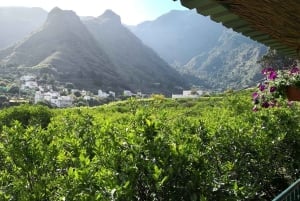
Perched above the Atlantic on a dramatic cliff edge, the town of Moya enjoys a setting that feels both exposed and protected. Look north and the ocean stretches endlessly; look inland and the land folds into steep ravines carved over millennia. The Barranco de Moya, one of the island’s last remnants of laurel forest, runs through the municipality like a living artery, lush and cool even on warmer days. It’s a reminder that Gran Canaria was once far greener than the sunlit image most visitors carry with them.
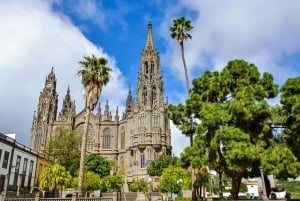
The town itself is compact, practical, and unassuming. While the Neo-Romanesque church is impressive, there is no grand square or polished promenade competing for your attention. Instead, Moya presents itself as it is - everyday life unfolding quietly. No-frill cafés such as Taberna La Relojería Quesos y Vinos, La Resistance and Restaurante Bamboo open when they’re ready, locals greet one another without ceremony and the rhythm of the place is set more by weather than clocks. It’s one of those places that hasn’t rearranged itself for visitors, yet rewards traveller curiosity all the same.
Moya has a literary soul. It’s the birthplace of Tomás Morales, one of the Canary Islands’ most important poets, and his presence lingers in a dedicated museum. There’s a sense here of reflection, of inward-looking thought shaped by misty mornings and long views out to sea. It’s a place where words seem to matter, even when few are spoken.
The surrounding countryside is where Moya truly comes alive. Trails descend into the barranco, where ancient trees filter light into soft green hues and the air feels several degrees cooler. Walks here are immersive rather than panoramic - less about sweeping views, more about moss, roots, and the steady trickle of water. For hikers who prefer texture over drama, this landscape offers quiet reward.
Down at the coast lies El Altillo, a small coastal enclave beneath the cliffs. It’s not a beach destination in the traditional sense (it’s rocky and often wild) but it does offer a raw connection to the Atlantic. Fishermen still work from these waters, and on rough days the waves pound the rocks with a force that feels both awe-inspiring and humbling.
Moya is not glossy. It’s not immediately charming. And that’s precisely its strength. This is Gran Canaria stripped back to essentials: land, water, weather, and community. It’s a place that doesn’t ask to be liked, but slowly earns your respect.
For travellers willing to step away from the predictable, Moya offers something rare: authenticity without performance. You don’t visit Moya to tick boxes. You visit to understand a different face of the island - one shaped by cloud, resilience, and quiet continuity.